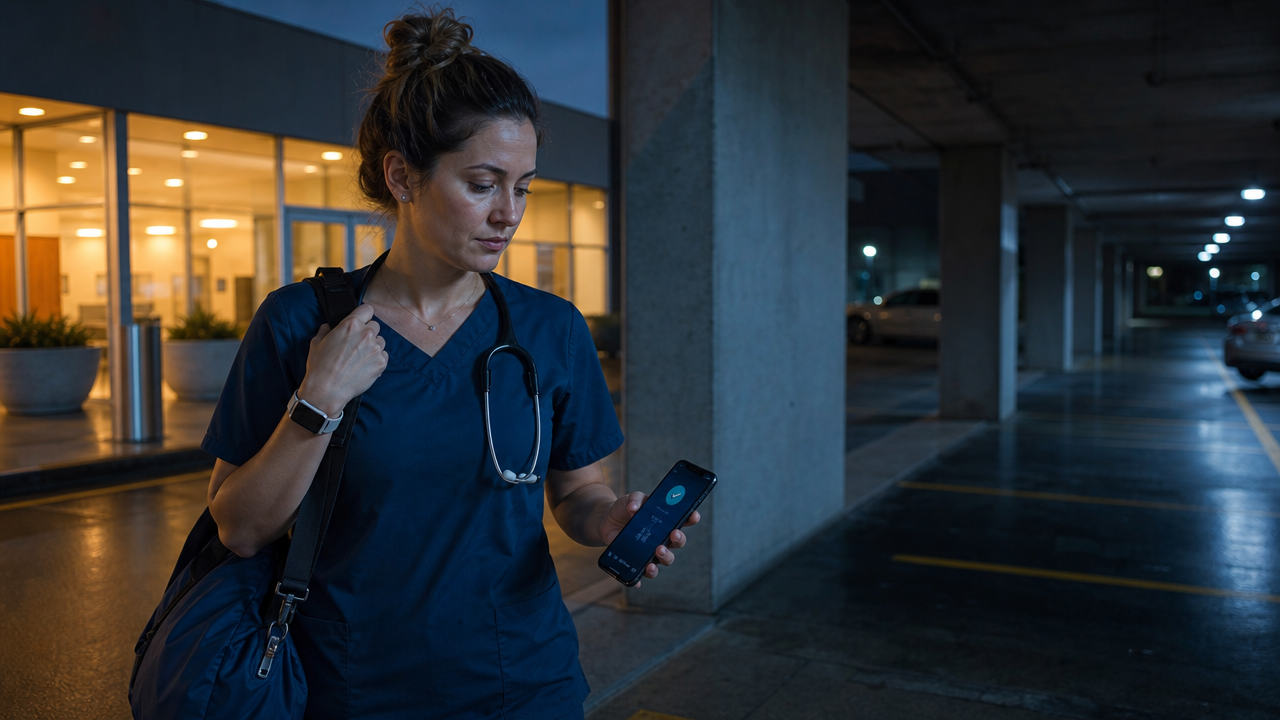
Every organization has them, even if no one uses the label. The nurse finishing a shift at 3 a.m. The field technician driving between sites with no colleague in the passenger seat. The retail manager who counts the till alone and then crosses a dark lot to her car. The lab researcher still working after the building has emptied out. These are lone workers, and the moment any of them clocks out of the group and into isolation is the moment your duty of care is tested most.
The uncomfortable truth is that most workplace safety programs are built for the building, not for the person who has just left it. Cameras, badge access, and a front desk all stop at the door. A lone worker safety app is how responsible employers extend protection past that door, into the garage, the commute, and the after-hours window where the data consistently says the real risk lives.
This is a practical guide to what actually matters when you evaluate one, and where most tools quietly fall short.
Why lone worker safety climbed the priority list.
For years, lone worker safety was treated as a niche concern for oil rigs and remote survey crews. That framing is badly out of date. The modern lone worker is just as likely to be a hospital employee, a late-shift logistics worker, a property manager, or a woman walking to her car after a closing shift. Three forces pushed this up the agenda.
Regulatory pressure.
Agencies now treat workplace violence and isolated work as recognized hazards employers are expected to address, not unpredictable events they can shrug off after the fact.
Insurance and liability.
Carriers increasingly ask what demonstrable safeguards you have in place before they price a policy or pay a claim. "We had a document" is no longer a satisfying answer.
Workforce expectations.
Employees, and the people who love them, now expect their employer to take after-hours safety seriously. It has quietly become a recruitment and retention issue, not just a compliance one.
The pattern underneath all three is simple and stubborn: risk concentrates wherever supervision disappears. A lone worker app is a direct answer to that pattern.
The seven things a lone worker app must get right.
Not every tool wearing the "lone worker safety" label is built the same way. This is the checklist we give the HR and risk leaders we talk to, in rough order of how often it is the thing that makes or breaks real-world safety.
Low-friction check-ins.
If checking in takes more than a couple of taps, people stop doing it, and a check-in nobody completes protects nobody. The best apps make it feel native and effortless, so compliance stays high without nagging.
A silent SOS that reaches the right people.
A loud alarm can escalate a situation. A discreet, silent alert to the two or three people who can actually respond, carrying location and context, is far more useful than a siren or a call into a queue that arrives knowing nothing.
Real-time, consent-based location.
Location should activate when it matters and clear when the trip ends. Always-on tracking breeds resentment and privacy complaints, and resented tools get switched off.
A trusted-contact loop, not just a hotline.
The people most likely to show up fast are usually a manager, a colleague, and a designated safety contact, not an anonymous monitoring center halfway across the country. A strong app builds that human loop in.
Verified identity in the network.
This is where many "anonymous" safety tools quietly create the very risk they claim to remove. A verified community is a safer community, full stop.
Proactive companionship.
A tool that only waits for a panic press is reactive by design. Accompanying someone through a risky moment so the emergency never forms is the more meaningful shift, and the one the best products are built around.
Reporting your risk team can use.
You should be able to show, in an audit or an insurance review, that your safeguards are real and used. Clean, exportable records turn a safety policy into demonstrable due diligence.
Where most legacy vendors fall short.
If you are renewing a contract with an incumbent provider, this is the moment to look closely rather than letting an auto-renew clause make the decision for you. The common failure modes are predictable.
Hardware dependence.
Dedicated panic fobs and pendants get left in drawers, lost, or run flat. The phone in your employee's pocket does none of those things.
Monitoring-center lag.
Routing every alert through a remote call center adds minutes when seconds are the whole game.
Reactive-only design.
Tools built around a single panic button assume the worst has already started. They have no answer for prevention.
Poor adoption.
A tool nobody opens is a line item, not a safeguard, and far too many programs are paying for exactly that.
A renewal date is not just a billing event. It is the best evaluation window you will get all year.
The right question is not "should we re-sign," but "would this actually help the person crossing that lot tonight."
Verified, not anonymous.
One distinction deserves its own section, because it is the one buyers most often get wrong. It feels intuitive that an anonymous safety tool is a more private, and therefore safer, one. It is also wrong.
Anonymity removes the accountability that keeps a safety network safe, which makes impersonation trivial and consequences toothless. A verified network, by contrast, changes how people behave inside it, makes reports actually actionable, and lets a genuine investigation happen when something goes wrong.
Privacy and verification are not opposites.
The goal is privacy-first data handling on top of a verified-identity foundation, not anonymity standing in for both.
The same architecture, now at work.
sidexside solved one of the hardest versions of this problem first, keeping people safe as they move across campus late at night, and the same architecture now extends directly to the workplace.
- A verified network, so the people in your safety community are who they say they are.
- Real-time peer companionship, pairing people moving through the same risk window instead of leaving them alone.
- A silent SOS plus a trusted-contact loop that alerts the people who can actually respond, with context.
- Ephemeral, consent-based location that protects the employee and clears once the trip ends.
- Prevention-first design intended to accompany people through risk, not just react to it.
- Exportable records that satisfy an auditor or an insurer.
A lone worker app is core infrastructure now.
A lone worker safety app is no longer a specialty purchase for remote crews. It is core infrastructure for any employer with night shifts, isolated roles, large parking footprints, or staff who simply deserve to feel safe getting to their cars.
The right tool is low-friction, verified, proactive, and respectful of privacy, and it produces the kind of evidence that satisfies insurers and regulators alike. If you are reviewing your program, replacing a vendor, or responding to a recent incident, the next step is a short, specific conversation about your risk.
Replacing a vendor or responding to an incident? Book a free consultation call and we will map your lone-worker risk and show you exactly how the platform fits.
Frequently asked questions.
What counts as a lone worker?
Anyone who works without close, direct supervision for part of their shift. That includes night-shift staff, field technicians, healthcare workers, retail closers, property managers, and employees walking to their cars after hours. The defining factor is isolation, not job title.
Is a lone worker safety app a legal requirement?
Requirements vary by region and industry, but employers generally carry a duty of care to take reasonable steps against foreseeable risks, and isolated work is a well-recognized one. In many jurisdictions, regulators now expect demonstrable measures, not just a policy.
How is this different from a panic button?
A panic button is reactive and only helps after a situation has escalated to the point of fear. A modern app is built around proactive companionship and a verified, trusted-contact network, so help is connected before an emergency, not only summoned during one.